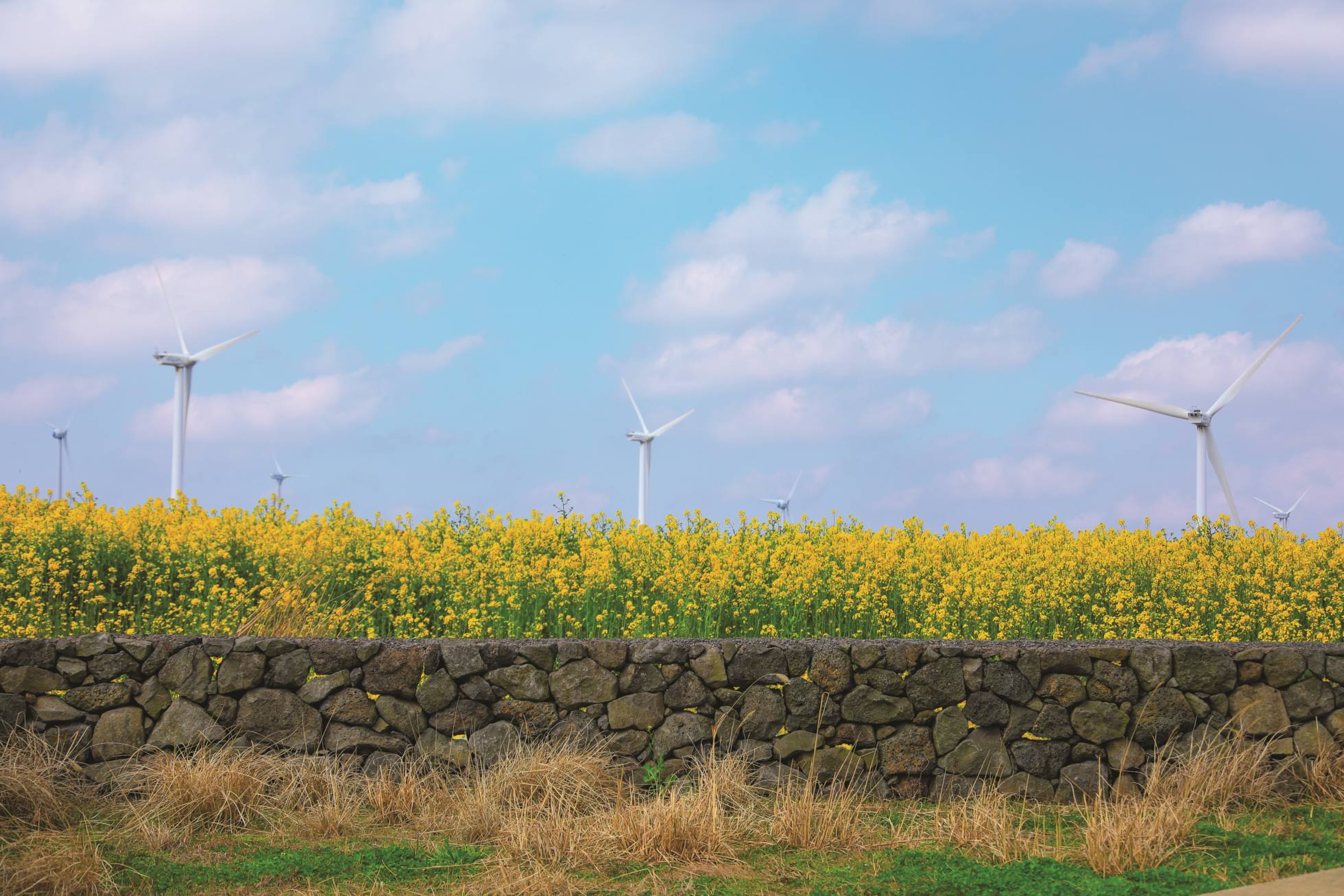
Stone walls are a familiar sight across Jeju Island. You’ll see them everywhere—around homes and farmland, along narrow streets, across pastures, and even by the sea—each serving a purpose shaped by its location. Built from basalt, a volcanic rock formed when lava cooled and solidified, these walls reflect Jeju’s landscape, where such stone lies scattered in abundance. Making use of the land’s natural resources, islanders have stacked stones to create walls throughout the island.
Jeju’s stone walls are built using only stones, without any binding materials such as soil or cement. Though the unworked stones vary in size and shape and may appear loosely stacked, constructing these walls requires considerable skill and experience. In Jeju, stone masons are known as dolchaengi, craftsmen with a trained eye for selecting the right stones and placing them precisely. Because a collapsed wall could lead to serious accidents, each stone is laid with great care. Strength alone is not enough; aesthetic balance is also taken into account. With patience and expertise, dolchaengi create walls that are both sturdy and quietly beautiful.
Stone walls built in this way can withstand even strong winds. They do not easily collapse, even when typhoons sweep across the island. Basalt is naturally full of pores, and because each stone differs in shape, the walls contain many small gaps. These gaps allow wind to pass through, reducing the pressure on the wall. This is why walls made of rough, unworked stones are able to stand firm over long periods of time.
14