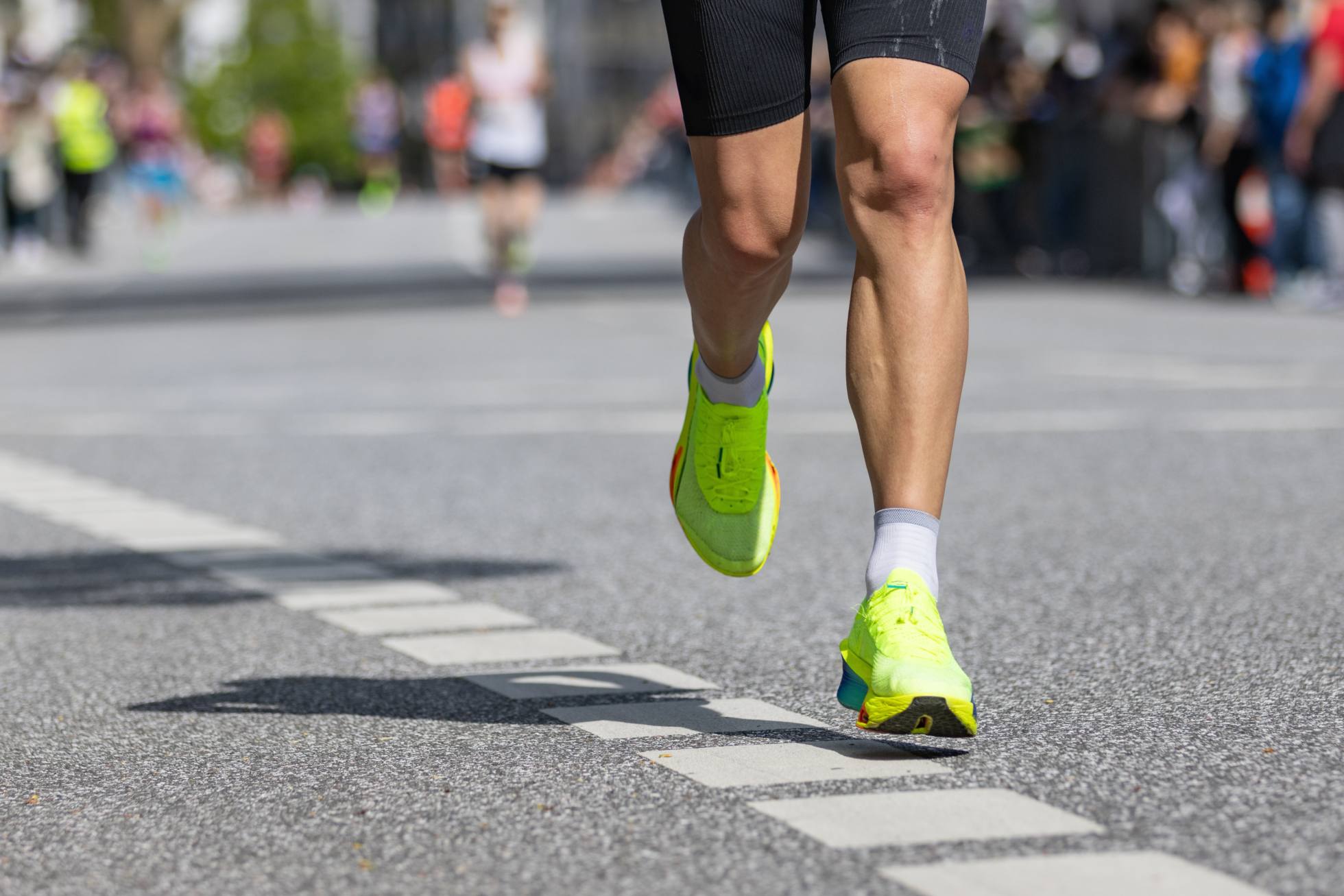
In November 2021, approximately 30,000 runners participated in the New York City Marathon, and 25,000 crossed the finish line. Among them was Tommy Rivers Puzey, who finished near the very end with a time of 9 hours, 18 minutes, and 57 seconds. Yet, he was no ordinary runner. An accomplished trail runner1 and ultrarunner2, Puzey had once set a personal best of 2 hours, 18 minutes, and 20 seconds at the 2017 Boston Marathon. Why, then, did he finish more than seven hours slower that day?
In July 2020, after seeking medical attention for a persistent cough and shortness of breath, Puzey was diagnosed with an aggressive form of lymphoma. While he underwent further testing, his condition deteriorated so rapidly that he eventually fell into a coma. In the intensive care unit, he endured tube feeding, ECMO treatment, and grueling chemotherapy, suffering through numerous complications. After a long battle on the brink of death, he even underwent a bone marrow transplant. Standing 183 cm tall, his weight had plummeted to just 44 kg.
Following his discharge, he began relearning how to walk using a walker—his body reduced to skin and bone, and his lungs functioning at only 20 percent capacity. He could run for only thirty seconds before needing to rest for fifteen. Yet, he remarked, “I don’t think anything has changed necessarily except that I’m not able to do it as fast.”
Sometimes, records aren’t what matters most. Perhaps miracles begin simply with the courage to take the next step.
-----------------------------
1. A runner who races on natural, unpaved terrain, such as mountain or forest paths.
2. A runner who competes in distances exceeding a standard marathon.
28