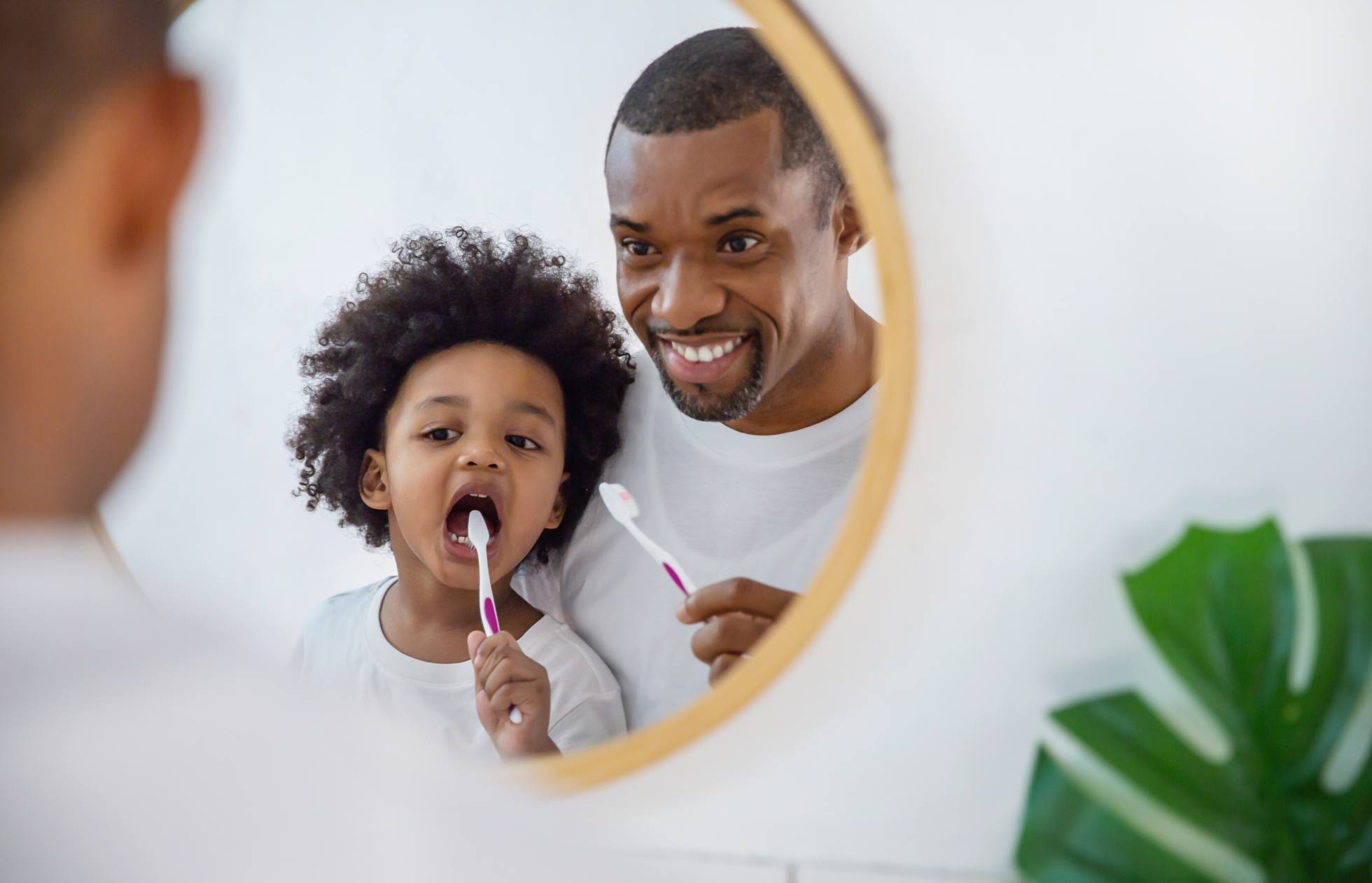
In the late 1990s, an American product design firm was commissioned by a toothbrush manufacturer to design a children’s toothbrush that would help reduce children’s resistance to brushing their teeth.
Before beginning the design process, the team visited several homes to carefully observe children as they brushed. They soon noticed a common pattern: many children seemed uncomfortable gripping their toothbrushes.
At the time, most children’s toothbrushes were simply miniature versions of adult ones, scaled down in size but otherwise unchanged. The designers realized that these thin handles were not well suited to children, whose motor skills were still developing and whose grip strength was limited. Taking this into account, they redesigned the handle to be thicker and added textured grips to prevent slipping. The result was a toothbrush that fit comfortably and securely in a child’s hand. The new design was well received by consumers and quickly became a popular product.
When we see things from another’s perspective and observe with care, we begin to see things differently. Such perspective is valuable not only in designing new products, but also in how we understand and relate to one another.
3