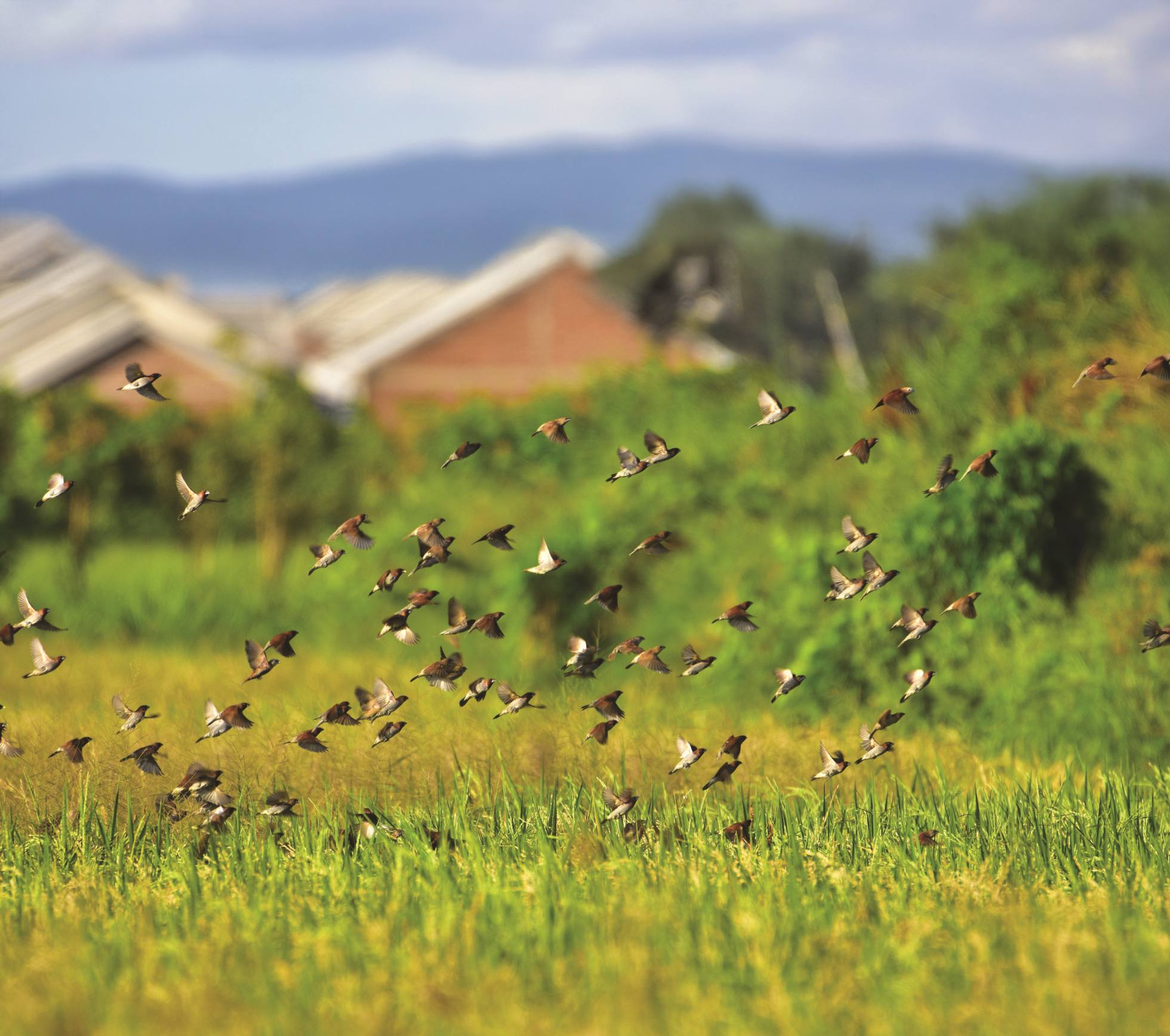
In 1958, China launched a nationwide campaign to exterminate sparrows, believing they were responsible for reducing grain yields. From children to the elderly, the entire nation was mobilized to catch sparrows, and hundreds of millions of them were killed.
People expected a bountiful harvest, confident that a major threat to their crops had been eliminated. However, their expectations proved tragically wrong. Instead, China faced severe crop failures. With the sparrows gone, insect populations surged; swarms of locusts, no longer kept in check by their natural predators, devoured crops across the countryside. Although some 200,000 sparrows were later brought in from the Soviet Union, it was too late to reverse the damage. China then endured a devastating three-year famine, during which tens of millions of people died, with some estimates reaching around 40 million.
The campaign against the sparrows stands as a powerful example of what can happen when even a single part of an ecosystem is disrupted. In nature, no organism is insignificant. Each plays a unique role, and when all organisms interact in their own way, nature remains balanced and the ecosystem stays stable.
3