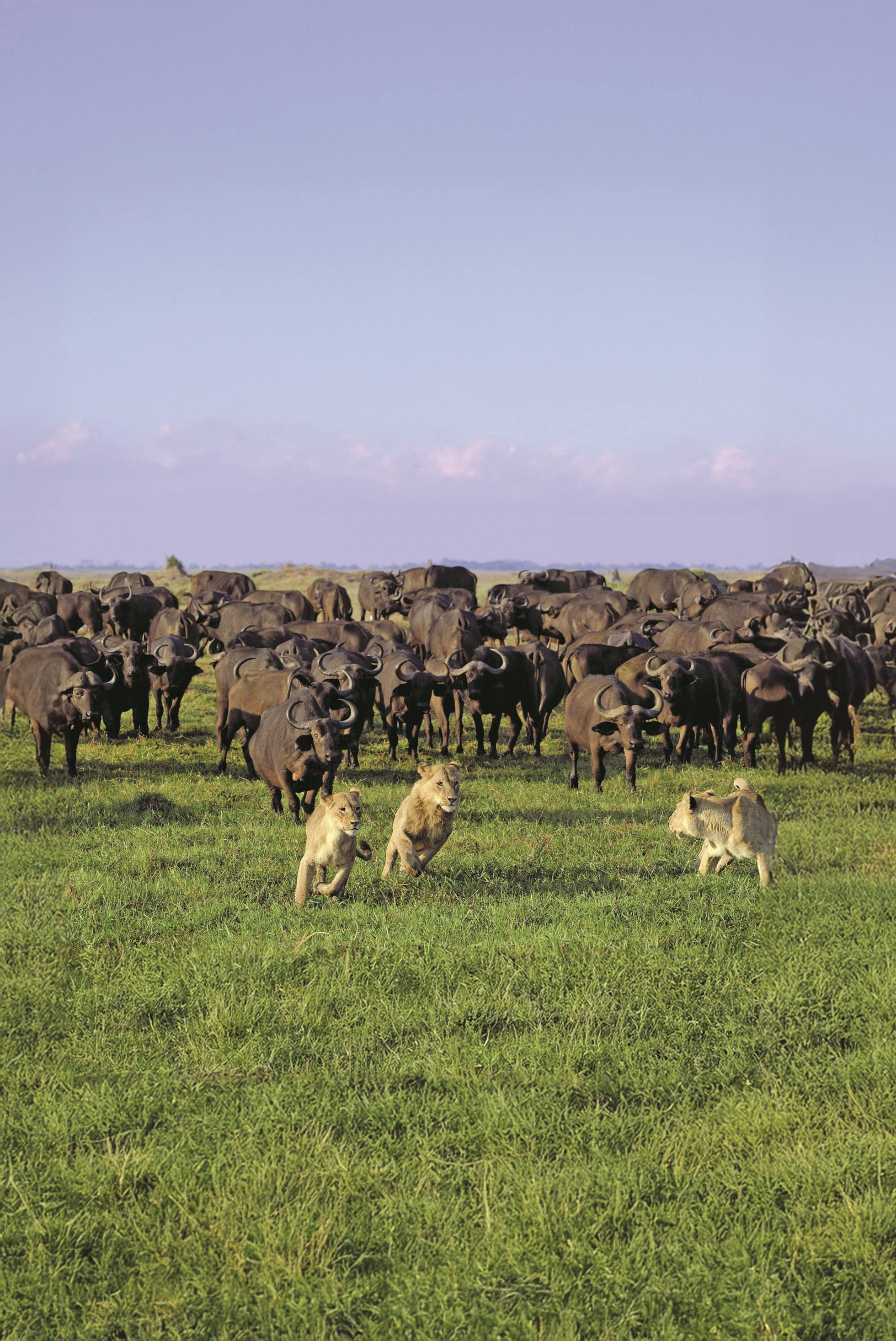
In South Africa’s Kruger National Park, a herd of buffalo was making its way peacefully toward a lakeshore. On the opposite side, a pride of lions lay in wait, watching as the herd drew nearer. The buffalo spotted the lions and quickly fled, but in the chaos, a calf was struck by a lunging lion, and both tumbled into the water. As the other lions rushed in to drag the calf onto the bank, a crocodile emerged from below and clamped its jaws around the young buffalo. A desperate tug-of-war followed. The lions pulled with all their strength until, finally, the crocodile lost the struggle and slipped back into the water.
At last, the lions had secured their prey. But just as they were about to begin their feast, something unexpected happened. The buffalo herd—once scattered in fear—had returned, surrounding the lions like a wall and steadily closing in. Suddenly, one buffalo charged forward and rammed a lion. The rest of the herd followed suit. Under the relentless assault, the lions, who had clung so fiercely to their prize, were forced to abandon it and flee. Against all odds, the calf survived.
This dramatic scene is captured in the viral video titled “Battle at Kruger.” In the natural world, where the strong typically prey on the weak, it is rare to see prey confront their predators so boldly. Yet, there is a way to win even a battle that seems unwinnable: standing together. Even the most vulnerable, when united, can exert a force powerful enough to drive back the fiercest of enemies.
29